Different Faiths. Shared Values. One Brotherhood.
Freemasonry is not a religion, nor is it a substitute for one. It has no theology of salvation, offers no sacraments and asks its members neither to change their religion nor to set aside their religious duties. Under the United Grand Lodge of England, a candidate must affirm belief in a Supreme Being, but Freemasonry does not prescribe a particular religious tradition.
At New Broomfield Lodge, we celebrate the fact that men from different backgrounds can meet as equals, united by friendship, integrity, charity, respect and a desire to improve themselves. Religious and political controversies are not debated in the Lodge: this helps preserve harmony while respecting each Brother’s conscience.
Ancient Wisdom and the Craft
The illustrations below explore meaningful ethical parallels between six religious traditions and Masonic teaching. They are invitations to understanding, not statements that all religions have identical beliefs or that any faith formally endorses Freemasonry.
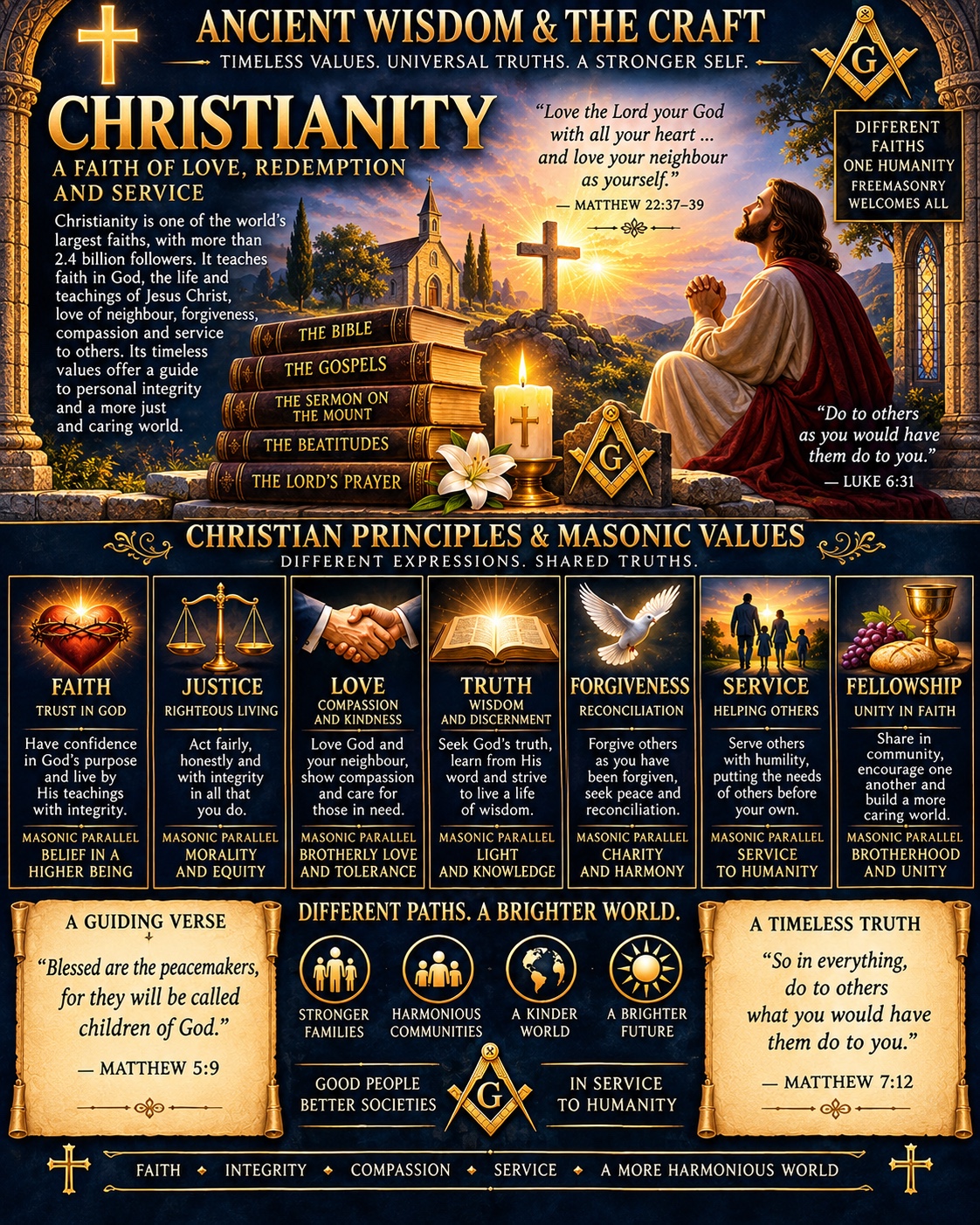
Hinduism: Shared Principles of Character and Service
Hindu traditions embrace many approaches to the Divine and place great emphasis on dharma (right conduct), self-knowledge, duty, compassion and seva (service). These ideas resonate with Freemasonry’s call to integrity, personal improvement and charitable action. The comparison is ethical, not theological: Masonic ceremonies do not replace Hindu worship, scripture or spiritual practice.
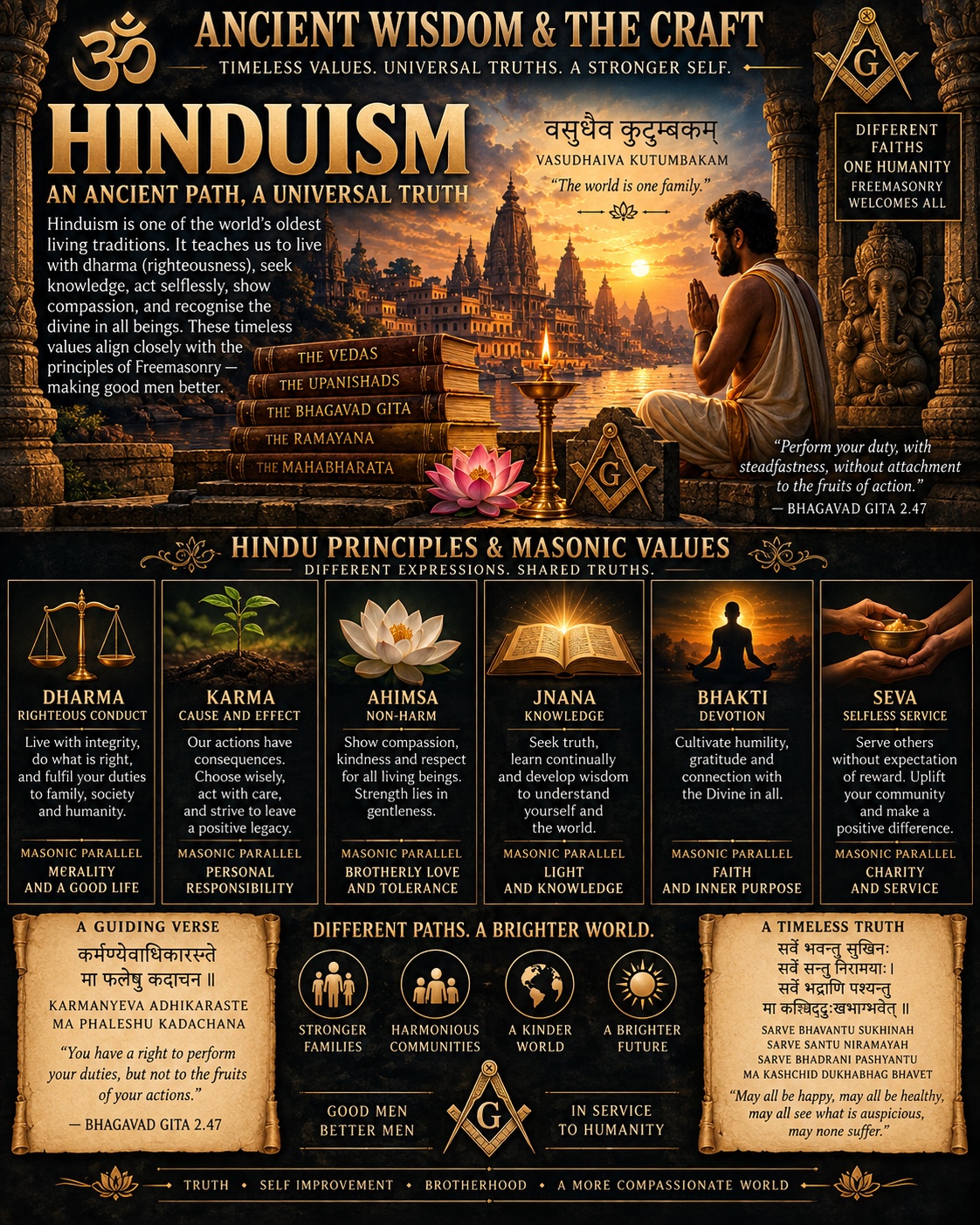
Sikhism: Shared Principles of Character and Service
Sikh teachings emphasise truthful living, honest work, equality, remembrance of the Divine and seva — selfless service. These values find clear parallels in Masonic charity, mutual respect and the duty to help others. A Sikh Freemason remains guided by Sikh faith and the teachings of the Gurus; the Lodge is a place of fellowship, not a second religion.
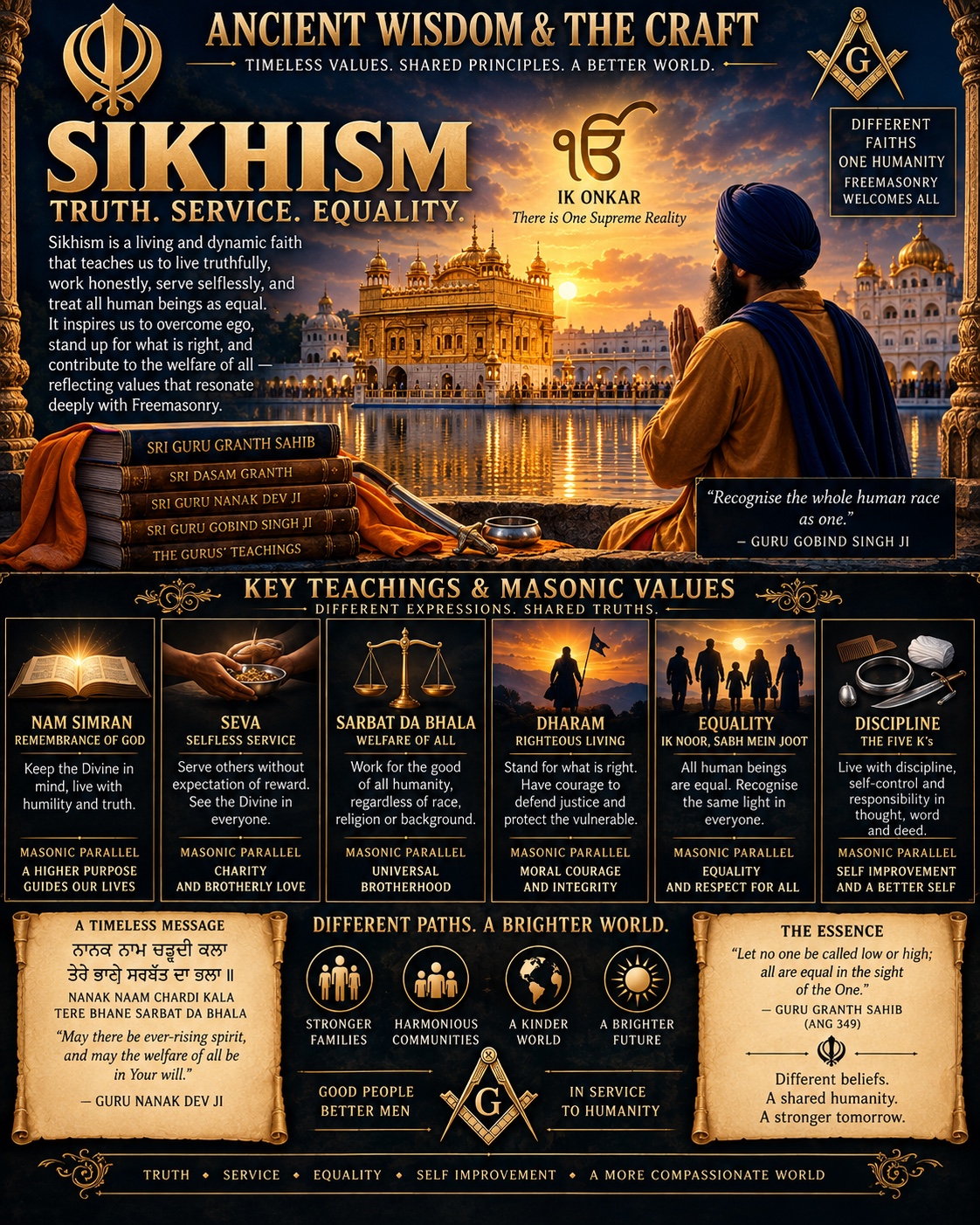
Islam: Shared Principles of Character and Service
Islam places great importance on justice (‘adl), mercy (rahmah), generosity, knowledge and moral responsibility. These virtues resonate with Freemasonry’s emphasis on upright conduct, charity and service. Muslim Brethren retain their Islamic obligations and worship; Freemasonry does not offer an alternative creed or seek to reinterpret the Qur’an.
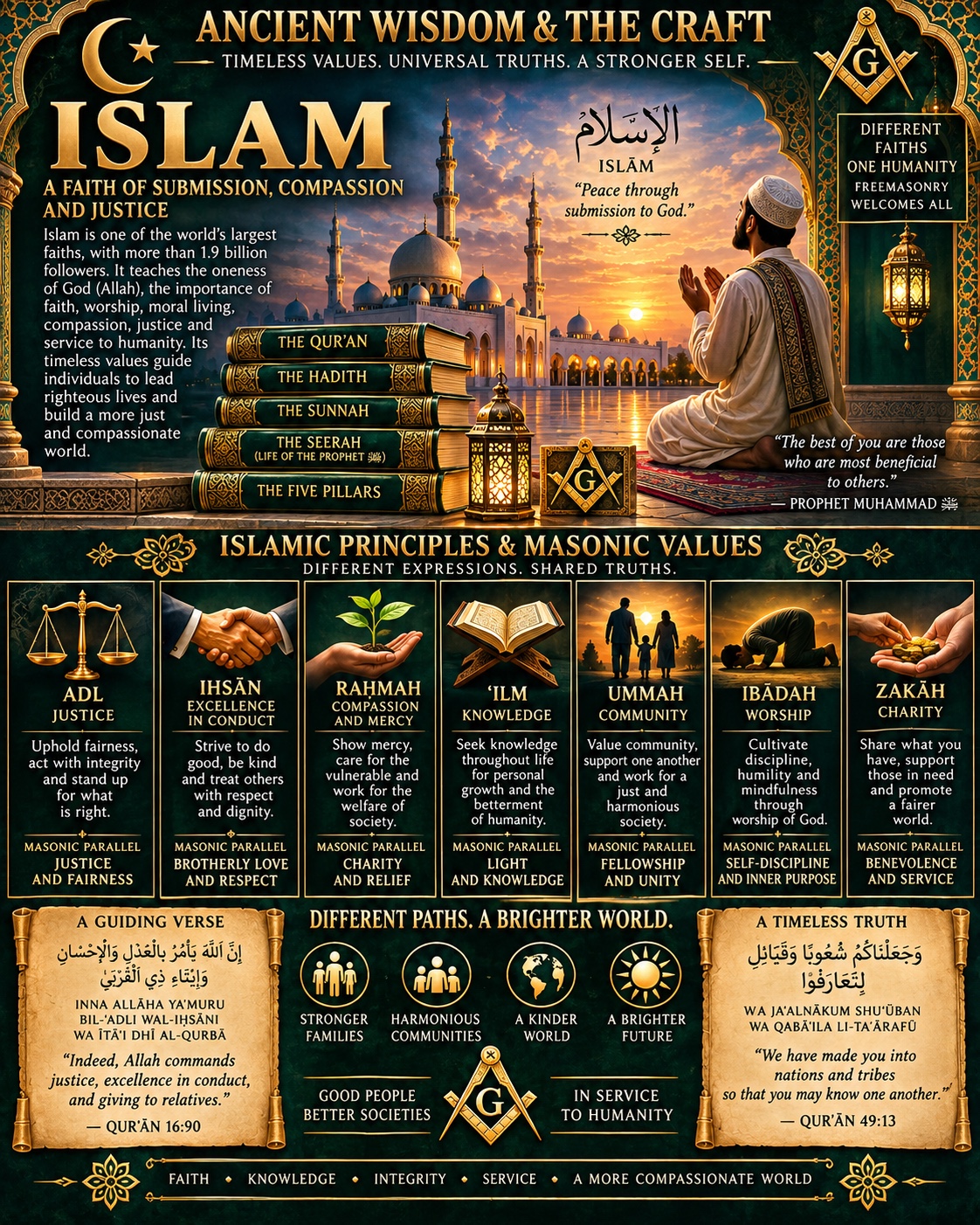
Christianity: Shared Principles of Character and Service
Christian teachings of love of neighbour, forgiveness, justice, charity and service have strong ethical parallels with Masonic brotherly love, relief and truth. A Christian Freemason can understand his Masonic commitments as encouragement to live out his own moral responsibilities. Freemasonry is not a Christian denomination, and its ceremonies are not Christian sacraments.
Judaism: Shared Principles of Character and Service
Judaism emphasises justice (tzedek), loving-kindness (chesed), learning, communal responsibility and acts of repair and service. These themes echo Masonic commitments to fairness, benevolence and the improvement of character. Jewish Brethren remain fully rooted in their own religious observance and tradition; the Lodge does not prescribe Jewish belief or practice.
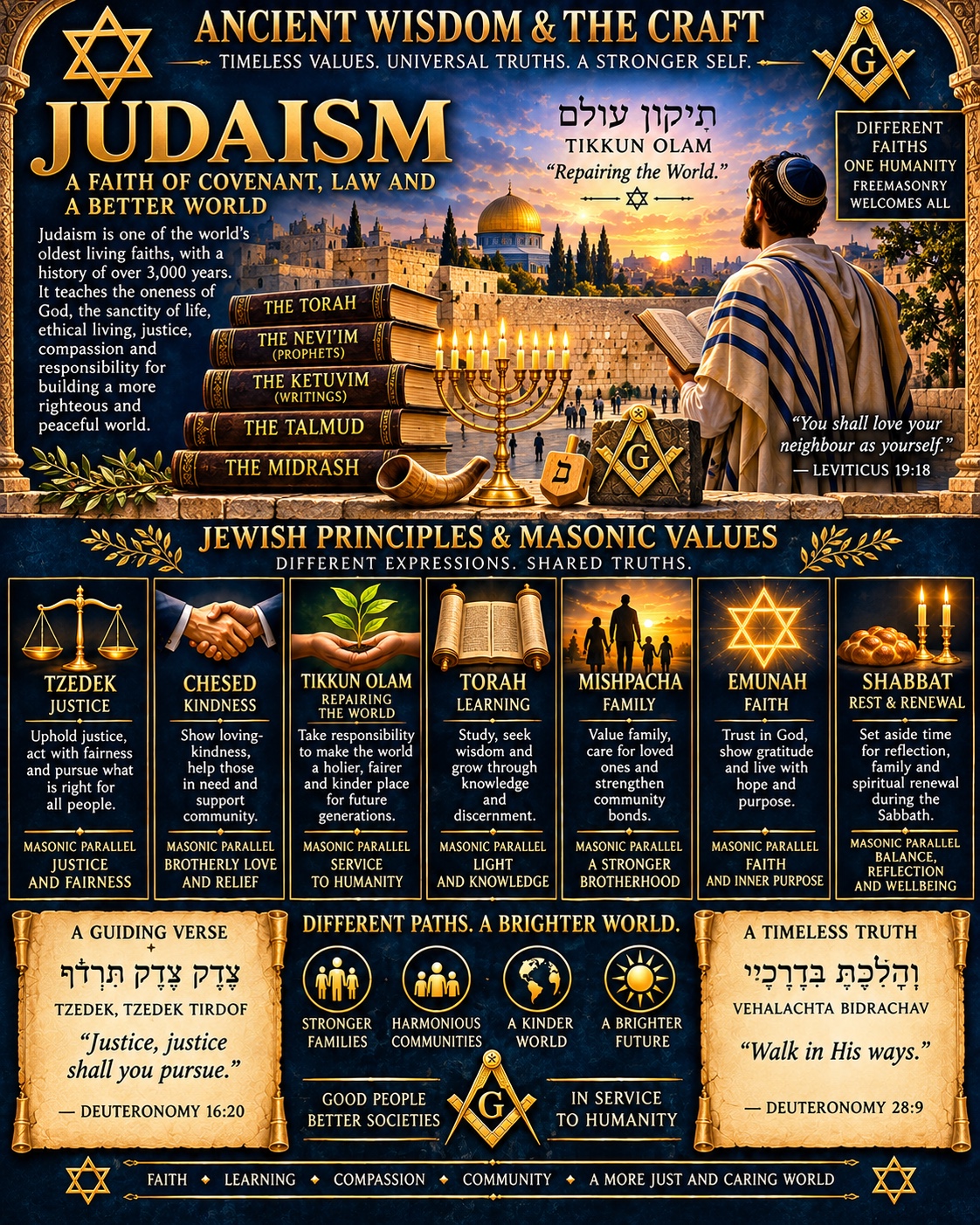
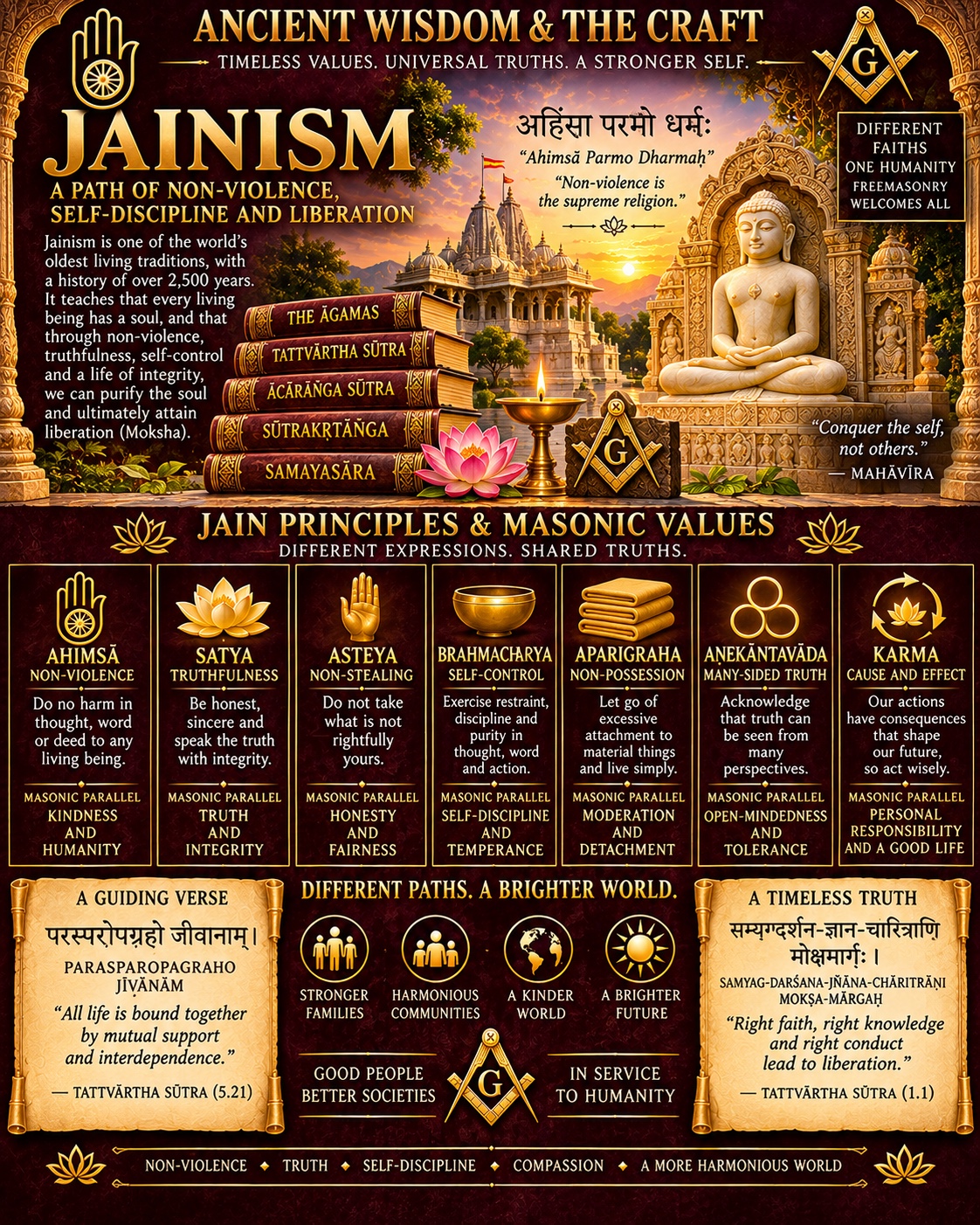
Jainism: Shared Principles of Character and Service
Jain traditions place particular weight on ahimsa (non-violence), satya (truthfulness), self-restraint, non-possessiveness and respect for living beings. Their ethical emphasis offers illuminating parallels with Masonic integrity, moderation, compassion and self-discipline. There is, however, an important distinction: Jainism is generally non-creator-theistic, while Freemasonry under the United Grand Lodge of England requires a belief in a Supreme Being. The compatibility of an individual’s beliefs with that requirement should never be assumed solely from the label of their religion.
Faith Is Personal. Brotherhood Is Shared.
Freemasonry does not claim that all faiths are the same. It offers a place where differences of doctrine need not prevent friendship and common service. A Brother brings his own faith and conscience to the Lodge and leaves with the same freedom to practise them.
A note on the artwork: these are illustrative educational posters, not authoritative statements of religious doctrine or Masonic ritual. Quotations, translations and scriptural references shown within the artwork should be checked against authoritative editions before being relied upon as exact citations. Eligibility for membership is considered individually under UGLE requirements.

